12 Facts About the Boulders Beach Penguins That Will Surprise You
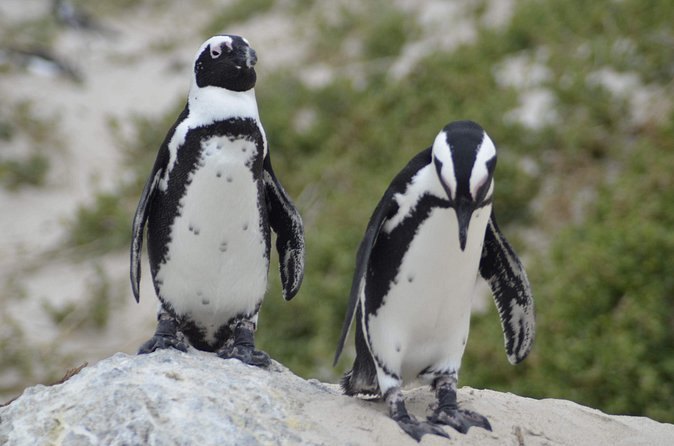
The short answer. Two breeding pairs settled at Boulders in 1982. A census in June 2026 counted 790 pairs, about 2,528 birds, which is between 8 and 9 per cent of South Africa's entire African penguin population. The species was listed Critically Endangered in October 2024, the first penguin in the world to reach that category. The granite they nest among is around 540 million years old.
The colony is the reason for the boardwalk, the fee and the fame, and almost nothing about it is ordinary. Here are twelve things worth knowing before you stand at the rail, each of them sourced. If you are still choosing a day out, the Boulders Beach and Cape Point tour are compared elsewhere on this list.
1. It began with two pairs, in 1982
African penguins bred on offshore islands, not on the mainland, where land predators reach them. Two pairs settled among the granite at Boulders in 1982 and stayed. Everything since — the fence, the boardwalk, the national park section — followed from that.
2. The 2026 count was 790 breeding pairs
SANParks, the Department of Forestry, Fisheries and the Environment, the City of Cape Town, the Cumic Rangers, SANCCOB and a group of volunteers walked the site in June 2026. The result, announced on 25 June, was 790 pairs against 698 the previous year.
3. That is roughly 2,528 individual birds
And between 8 and 9 per cent of South Africa's African penguins, on a beach you can walk to from a railway station. SANParks calls it a key breeding colony for the species.
4. The species became Critically Endangered in October 2024
On 28 October 2024 the IUCN moved the African penguin from Endangered to Critically Endangered. It is the first of the world's eighteen penguin species to reach that category. The detail sits on the African penguins.
5. About 97 per cent of the population is already gone
At the 2024 assessment roughly 19,800 mature birds remained in the wild, about 9,900 breeding pairs, split between South Africa and Namibia. The cause is at sea: the sardine and anchovy stocks the colonies feed on have shifted, and a bird that cannot fly cannot follow them far.
6. The boulders are about 540 million years old
The rounded granite that gives the beach its name is Precambrian, weathered smooth long before anything with feathers existed. It is also why the cove is such a calm swim: the rocks take the swell.
7. They bray like a donkey
The old name for the species is the jackass penguin, and standing at the boardwalk in breeding season you hear why. A displaying bird throws its head back and brays, and the sound carries the length of the beach.
8. The pink patch above the eye is a radiator
It is a gland that helps the bird shed heat, and blood flows closer to the surface when it is hot, so the patch deepens in colour. It is also the fastest way to identify the species in a photograph.
9. Once a year they cannot swim at all
African penguins moult catastrophically: every feather at once, over about three weeks, during which the bird is not waterproof and cannot feed. At Boulders that falls mainly in November and December. Moulting birds stand motionless in the dunes and look wretched, which is entirely normal.
10. In September and October the beach can look empty
Before the moult the adults go to sea and feed heavily, and the colony thins to its lowest point of the year. It is the single biggest reason a visitor comes away disappointed, and it is entirely avoidable by checking the month on the best time to visit.
11. They nest in the scrub, not on the sand
The dune vegetation behind Foxy Beach is where the burrows are, which is why the boardwalk runs where it does and why stepping off it matters. The cove at Boulders Beach, the one you may swim in, is a different part of the reserve; the difference is set out on where Boulders Beach is.
12. The town has rebuilt itself around them
Penguins cross roads in Simon's Town, nest under decks and walk into gardens. The town has responded with speed bumps, fencing and patience. Very few places in the world have adapted a suburb to a seabird.
What the numbers do not tell you
Two more things you will see and may not recognise. Birds standing with their flippers held away from the body are cooling themselves, using the same blood-flow trick as the pink patch above the eye. And a bird lying flat on its front in the sand is not ill; it is simply resting in a position that would look alarming on any other animal.
What it costs the birds to live here
A mainland colony is a compromise. The scrub gives cover that an island does not, but the road is close, the dogs are close, and in summer the temperature in an open burrow is higher than a chick can manage. The nest boxes you may notice among the vegetation are a response to that: the colony's managers put them in where natural burrows are scarce.
What you can do about any of it is small and real. Stay on the boardwalk, keep food packed away so gulls are not drawn to the nests, and pay the conservation fee without resenting it, because it funds the section of park that keeps this beach a colony rather than a suburb. The practical side is on visitor tips.
What the numbers look like on one page
| Fact | Figure | When |
|---|---|---|
| Founding pairs | 2 | 1982 |
| Breeding pairs | 698 | 2025 census |
| Breeding pairs | 790 | June 2026 census |
| Individual birds | about 2,528 | June 2026 |
| Share of the national population | 8–9% | June 2026 |
| Global mature birds | about 19,800 | 2023 assessment |
| Age of the granite | about 540 million years | — |
Seeing it for yourself
The colony is open every day of the year, on four different sets of gate hours, with a daily conservation fee paid by card at the entrance. All of that is on hours, fees and access, and the ways of getting down the peninsula are on how to get to Boulders Beach.
Before you book
None of these numbers changes what you should book, but the month does, and so does the hour you arrive. Both are printed beside every fare on Boulders Beach Tours.
Twelve facts are one thing; a guide who knows which burrow has chicks this week is another. These days put you at the rail with one.
Guided days with the colony on them
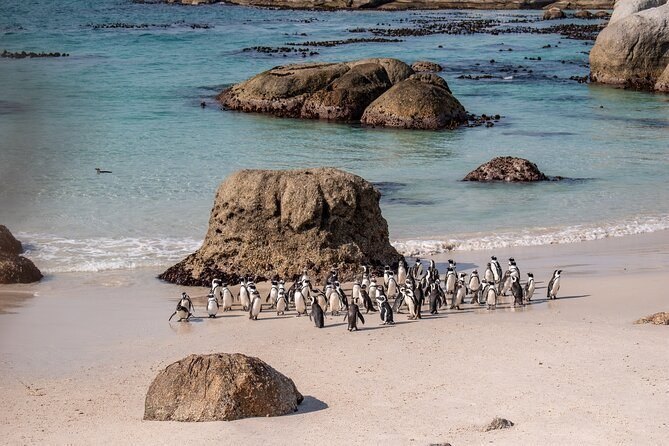
Cape of Good Hope and Boulders Penguins Day Tour from Cape Town
Twelve travellers at most, two hours inside Cape Point Nature Reserve.
From $57 per person
Check Availability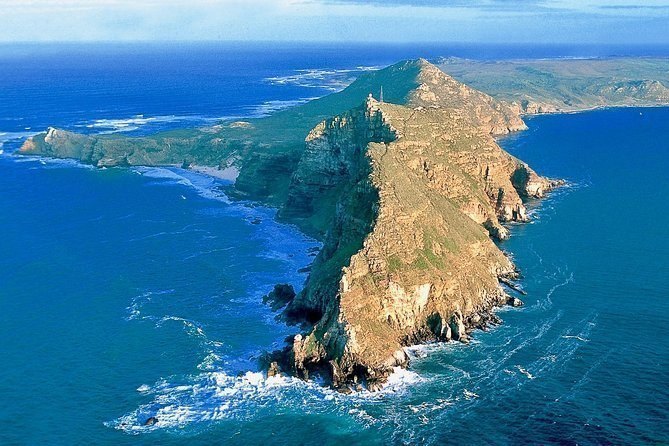
Cape Point and Boulder's Penguins Full Day Tour
An eight-hour coach day from the Waterfront, an hour at the colony and two at Cape Point.
From $31 per person
Check Availability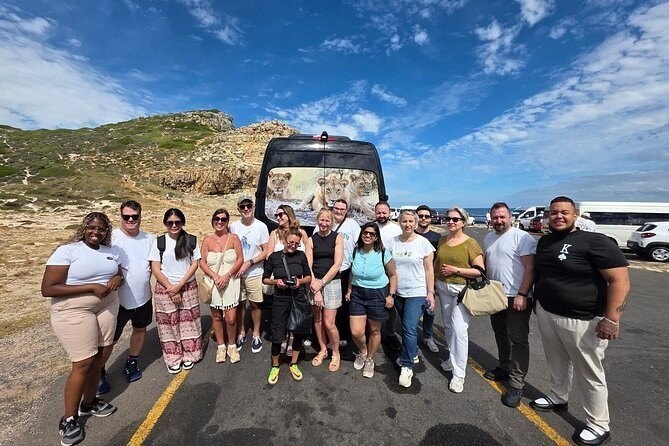
5-Star Small-Group: Cape of Good Hope, Penguins & Bo-Kaap Tour
Ten hours, fifteen travellers and more stops than anything at this price.
From $60 per person
Check Availability